Heads up: This post may contain affiliate links. If you buy through my links, I may earn a small commission at no extra cost to you. Learn more.
Debt Snowball vs. Avalanche: Which Saves More?
The debt snowball vs. avalanche debate is one of the most common questions people have when trying to pay off debt. Both methods are effective, but the right choice depends on your financial goals and personality. In this guide, we’ll explain both strategies, show how they work, and help you decide which one will save you the most money — and keep you motivated.
What Is the Debt Snowball Method?
The debt snowball method focuses on paying off your smallest debts first, regardless of interest rate. Here’s how it works:
- List your debts from smallest balance to largest.
- Pay the minimum on all debts except the smallest.
- Put all extra money toward the smallest debt until it’s gone.
- Repeat with the next smallest debt.
Many people prefer this method because it provides quick wins, which can boost motivation and momentum.
What Is the Debt Avalanche Method?
The debt avalanche method focuses on paying off the debt with the highest interest rate first, which saves you more money in interest over time. Here’s how it works:
- List your debts from highest interest rate to lowest.
- Pay the minimum on all debts except the one with the highest interest rate.
- Put all extra money toward that highest-interest debt until it’s gone.
- Repeat with the next highest interest debt.
This method may take longer to see your first debt completely paid off, but it results in paying less interest overall.
Debt Snowball vs. Avalanche: Which Is Right for You?
If you need motivation and quick wins to stay committed, the debt snowball method might be your best choice. If you want to save the most money and get out of debt as efficiently as possible, the debt avalanche method is likely better.
In many cases, the best method is the one you’ll stick to consistently. You can also combine both strategies — start with the snowball for motivation, then switch to the avalanche to save more on interest.
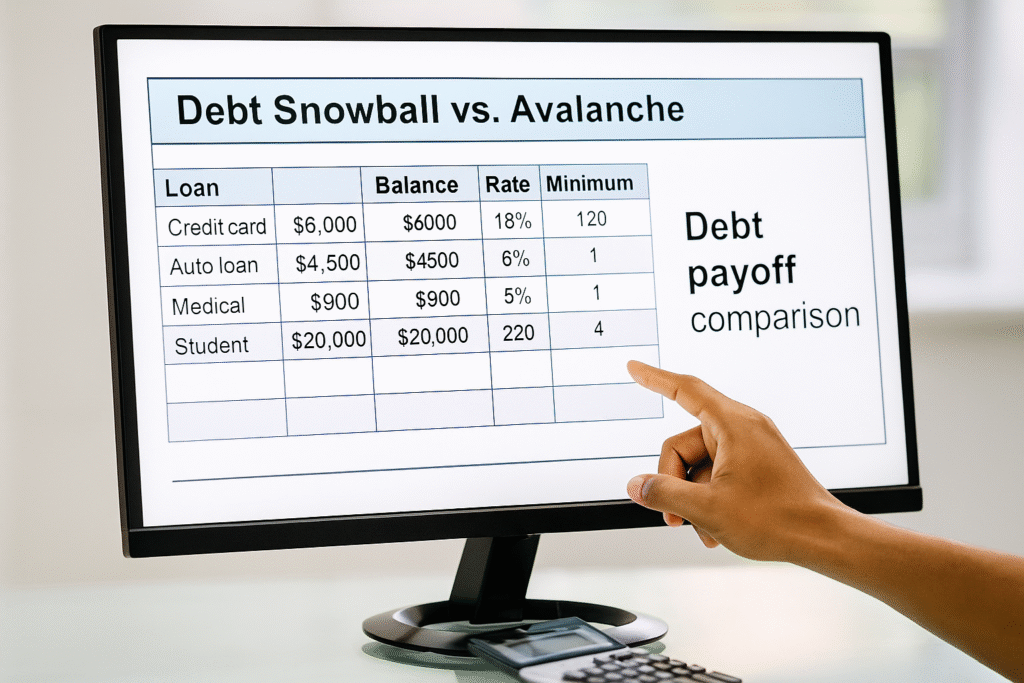
Example Comparison of Debt Snowball vs. Avalanche
Imagine you have three debts:
- $1,000 at 20% interest
- $3,000 at 10% interest
- $5,000 at 5% interest
With the snowball method, you’d pay off the $1,000 debt first, then the $3,000, and finally the $5,000. With the avalanche method, you’d tackle the $1,000 at 20% interest first (which in this case happens to also be the smallest), then the $3,000 at 10%, and finally the $5,000 at 5%. The avalanche would save you more on interest, but the snowball might give you faster emotional wins.
To learn more about debt repayment strategies, check out Investopedia’s detailed guide.
Final Thoughts
Choosing between the debt snowball vs. avalanche method comes down to your personal preferences and goals. Both work if you stay committed and make consistent payments. The most important thing is to start — because every payment gets you one step closer to being debt-free.